At the start of the year, I was thinking about the conferences I attended last year. One highlight was Genome Informatics, which I went to in September, on behalf of Genome Biology.
On this World Whale Day, we’ve been diving deep into the archives to find our most interesting research on our aquatic friends. Recreationally, around the world, people often enjoy embarking on whale watching trips – but where will you find the most enigmatic species? Researchers have spent many years documenting and recording whales and their migration routes, like some sort of Orwhaleian dystopia… but how much do you know?
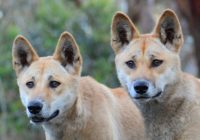
A debate on the above question is important because the Australian Government policy considers dingoes as a feral, allowing the widespread killing of the Australian dingo. Professor Bill Ballard and Dr Laura Wilson, authors of a new article on this topic lead us through the debate.
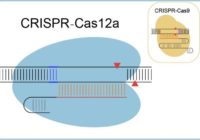
Recently published research in Genome Biology identifies several new CRISPR-Cas12a loci, a type of CRISPR-Cas system for editing mammalian genomes. Here, two of the authors of the paper, Wei Li and Fei Teng, tell us about their research and how it enhances and expands the genome editing toolbox.
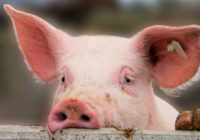
“Pigs are so compelling, so mysterious, so contradictory – finicky yet fat, massive yet dainty, stolid yet smart. We can’t decide what we think of them.” – Nissenson M, Jonas S. The ubiquitous pig. 1. New York: Abrams; 1992
In human societies, the answer to the above question may be a resolute never, but not all animals play by the same rules. In fact, such behavior might be more common than previously thought. In a new study published this month in BMC Biology, Aneesh Bose, Jonathan Henshaw, Holger Zimmermann, Karoline Fritzsche, and Kristina Sefc investigate how relatedness in cichlid fish can lead some males to tolerate extra suitors intruding on their territories and mating with their partners.
Parts of human DNA are of viral origin: many of them were inserted into the primordial genetic material of our ancestors many millions of years ago and have been inherited by successive generations ever since. Thus, they are not thought to vary much in the genomes of modern humans. Human endogenous retroviruses (HERV) are by far the most common virus-derived sequences in our genome. New research published in Mobile DNA shows a mechanism that has introduced more inter-individual variation in HERV content between humans than previously appreciated.
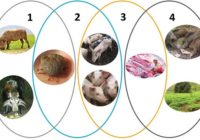
For more than ten years African swine fever (ASF) has been spreading in Eurasia, currently expanding its territory both west- and eastwards. The disease affects domestic pigs and wild boar: animals usually die within three to ten days after infection and the case fatality rate can be almost 100%. Disease impacts are enormous, relating to the welfare of domestic pigs and wild boar, and negative economic consequences for individual pig farmers, the pig industry, the hunting sector, regions, nations and common trade areas. A review published in Porcine Health and Management presents recent developments in the epidemiological understanding of African swine fever, based on the current epidemic in Europe and Asia.