Biotechnology for a bio-based economy

On World Environment Day, we look at what biotechnology can do to help reduce our reliance on fossil fuels and move towards a bio-based economy.
On World Environment Day, we look at what biotechnology can do to help reduce our reliance on fossil fuels and move towards a bio-based economy.

Set up by the United Nations, World Environment Day aims to raise international awareness of environmental issues and encourage action to protect our world and environment. The theme for this year’s day is ‘Air Pollution’ with China acting as the host country for the official celebrations. Air pollution is the cause of 7 million premature deaths each year and according to the UN, 9 out of 10 people breathe polluted air. Understanding the effects and taking relevant action are steps which will help to #BeatAirPollution. Test your knowledge of air pollution and its effects with our quiz!
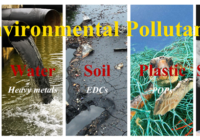
Early-life nutrition can profoundly affect development through the regulation of gene expression even when the DNA is not altered. In this blog, a research team out of University of Alabama at Birmingham summarize the evidence that an “epigenetics diet” can help protect against adverse effects of environmental pollution exposure whilst in utero and after birth.
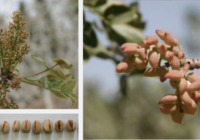
At Genome Biology we are as fascinated with plants as the next botanist and over the last couple of months we’ve seen some excellent plant research publish in the journal. Here, Senior Editor Andrew Cosgrove highlights a few of his favorites.
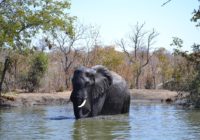
Photographs taken of wild animals might be more useful data sources than we previously considered. A new study published in Frontiers in Zoology shows that information about age, tusk size and even the sexual state of elephants can be extracted from routinely collected survey photographs, even when focal distance isn’t known and lots of different cameras are used. Here to tell us more is corresponding author of the study, Dr. Hannah Mumby.
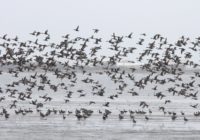
World Migratory Bird Day hopes to increase awareness about the threats birds are facing across the globe. With migratory birds relying on multiple habitats, this makes them even more vulnerable to change, so understanding migration routes is vital in learning where to focus conservation efforts. Test your knowledge of bird migration with our quiz.
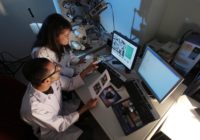
Editors of Fungal Biology and Biotechnology recently attended the 30th Fungal Genetics Conference in Pacific Grove, CA, USA. We invited young scientists who presented excellent posters at the conference to tell us more about their research. In this blog, we hear from Hans Mattila, Itai Brand-Thomas, Ken Miyazawa, Emmanuelle LeBlanc, and Norman Paege about their work.

Elderly adults are known to be at higher risk of cognitive dysfunction following surgical procedures, and there are known sex differences in cognitive decline rates in Alzheimer’s disease, but no studies have really examined how sex as a biological variable may contribute to post-operative cognitive dysfunction. This blog, written by the authors of a recently published study in Biology of Sex Differences, explain their recent study which sought to address this question.
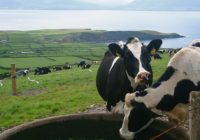
With eradication of bovine tuberculosis remaining elusive, Professor Simon More, Associate Editor of the Irish Veterinary Journal , explores whether this could be possible in the next decade.
We talk to Professor Kathryn Roeder about her research ahead of her keynote address at INSAR 2019.