Amy Inkster is the 2019 winner of the Biology of Sex Differences Best Poster Prize at the recent OSSD meeting in May. This Q&A provides an overview of her research into sex differences in placentas and how this can impact the pregnancy and postnatal outcomes.

Presidential Early Career awardee Prof Angela Pannier tells us about her research on finding safer and efficient methods of gene delivery, as well as her thoughts on receiving her prestigious US government honor.
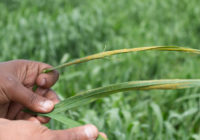
Plant pests and diseases are a real concern for the global agriculture industry and to food security. Early warning systems are essential to preparing for and combatting plant pests, and rapid diagnostic tools are pivotal to this. However, current procedures for strain-level fungal disease diagnosis are lengthy and not straightforward. Dave Hodson and Diane Saunders discuss their development of the Mobile And Real-time PLant disEase (MARPLE) system and how it has made possible an in-field gene-based rapid diagnosis of fungal diseases, specifically wheat rust disease, to the strain level. Their study is published in BMC Biology today.
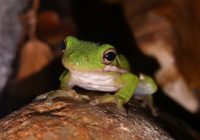
Surprisingly little is known on the nature of the secreted mucus and on the morphology of the glands that produce mucus in the sticky toes of tree frogs. In this blog, Julian Langowski, corresponding author of a new article published in Frontiers in Zoology, tells us about his 3D analysis of tree frog mucus glands and exploration of mucus chemistry.
We know that different people can perceive sounds and images like the blue/gold dress in divisive ways depending on how their brain processes them. But how can bilingualism alter the way that light and sound information are delivered to the brain?
Oomycota are fungal-like organisms and notorious parasites of fish, crops, and algae. A new study published in IMA Fungus analyzed samples across the Arctic and found Oomycota sequences that comprised completely unknown branches of life. As the Arctic continues to warm, Oomycota might migrate into the Arctic Ocean and parasitize non-coevolved hosts, leading to incalculable consequences.
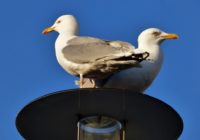
It is well established that sea gulls can profit from human food sources but at what cost? In this blog Susanne van Donk, corresponding author of a new article published in Movement Ecology explores what influences foraging decisions in herring gulls.
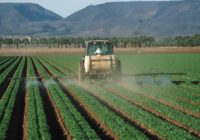
50 years ago the USA led the way in regulating pesticides, but research published today in Environmental Health finds that the country is still using many pesticides that are either banned or being phased out in the EU, China and Brazil. In this blog Nathan Donley, author of the research, tells us about his study and how an unofficial policy of relying on voluntary pesticide cancellations has led to this situation.