Posts by Simon Harold

Executive Editor for the BMC-series journals

Visit author's website: http://www.biomedcentral.com/authors/bmcseries

Follow author on Twitter: @BMC_series

Disease outcomes in ophthalmology – time for a multidisciplinary approach

- 0 Comments

By Emilie Aimé, Executive Editor BMC Ophthalmology

Translational research in ophthalmology is a fast growing field, with many centers now having dedicated groups focussing on bench to bedside approaches to research. There have been many recent major advances in the fields of cell biology, biochemistry and elsewhere, for example in stem cell research and nanotechnology based drug delivery systems. This means that multidisciplinary research projects looking to allow these novel technological advances to make a real difference to disease outcomes in a clinical setting is more important than ever.

In order to provide a dedicated home for this exciting translational research BMC Ophthalmology is launching a new article collection entitled Translational Ophthalmology: Looking to the future. The collection particularly encourages submission …

Read more

How our evolutionary past could help guide drug therapies of the future

- 0 Comments
T U R K A I R O_Flickr cc

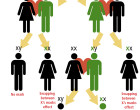
It is now well established that different human populations may exhibit very different responses to therapeutic drugs. However, to what extent this may have been influenced by our evolutionary history is less well known. In this guest blog, Ripudaman K Bains from University College London outlines why understanding our past can help inform our future, and describes her recent work published in BMC Genetics with colleagues from Addis Ababa University, Henry Stewart Group and Uppsala University on molecular diversity and population structure at the Cytochrome P450 3A5 gene in Africa.

One of the most significant accomplishments of the genomics revolution has been an improvement in our understanding of why certain populations have elevated risks for developing specific diseases. …

Read more

Automated Function Prediction: selected proceedings from the ISMB 2011 special interest group

- 0 Comments

BMC Bioinformatics has published proceedings from the Automated Function Prediction Meeting 2011 featuring the CAFA Challenge: Critical Assessment of Function Annotations.

Vienna, Austria. 15-16 July 2011.
Edited by Iddo Friedberg and Predrag Radivojac

The Critical Annotation of protein Function Prediction (CAFA) is a new community-wide experiment to assess the performance of protein function prediction methods. Thirty research groups participated in the first CAFA meeting , presenting a total of 54 methods. The results are published in an article in Nature Methods co-authored by all the attending groups.

The supplement is free to access, and is a companion to the Nature Methods article. The 15 articles describe some of the participating methods in depth.

CAFA is organized by Predrag Radivojac from Indiana …

Read more

Urology – En Vogue research in London, Milan and… San Diego

- 0 Comments

Urology, like fashion, evolves at a fast pace with every season, bringing with it new trends in medical knowledge, in addition to unveiling exciting and innovative advances in surgical technology.

Here in London, BMC Urology were unable to attend this year’s Annual European Association of Urology (EAU) Congress in Milan. However, Dr Gianmarco Isgro’, an Associate Editor for BMC Urology, and his colleague, Dr Giovanni Battista Di Pierro, were in attendance and spoke to us about how the EAU Congress is an important and invaluable experience for the young urologist.

The Annual EAU Congress is a platform for the international urological community to share the latest and the most relevant knowledge with medical experts practising across the board.  The use …

Read more

Highlights of the BMC-series: April 2013

- 0 Comments
BMCWordle

A grand plan for understanding life on Earth • (re)moving the mark of modification • Never say nematode again • Profiling the immune responses of deer mice • Looking forward, looking back • Heavy metal affects brain function • Lending a helping ligand

Biodiversity: a grand plan for understanding life on Earth

Understanding what drives the huge diversity of life on earth is perhaps the grand challenge of ecological research. Alex Hardisty and Dave Roberts bring us a little closer to realising this dream by outlining a grand vision for the future of biodiversity research that puts technological innovation and data sharing at its heart, following a huge community consultation effort with the Biodiversity Informatics Community. Our blog explains how …

Read more

A systems approach to understand biodiversity

- 0 Comments
Adapted from Fig 6 Mantle et al ZooKeys 209, 147-163

A grand vision for the future of biodiversity research puts technological innovation at its heart, and calls for greater openness in data sharing, standardisation and citizen science.

Your smartphone might  just help us understand how the natural world works. Snap a picture of a bird, tag the image with details of where and when you took it, and you could be helping scientists to understand – and quite possibly save – the world’s biodiversity.

Understanding what gives rise to the massive diversity of life on earth is perhaps the great challenge of ecological research. But to be able to predict how changes to this global system will affect the plants and creatures that live within it requires linking together huge amounts …

Read more

Ecological analysis, 75 million years in the making

- 0 Comments
Parasaurolophus walkeri restoration_Steveoc 86_Wikimedia Commons cc

The fossilised bones of a diverse assemblage of herbivorous dinosaurs provide clues about the feeding ecology of these extinct creatures, but suggests more evidence is needed to find out how such diversity was able to be maintained.

The fossil record is a capricious thing; we take from it only what chance dictates is preserved through time. Such patchiness poses unique problems for paleoecologists like Jordan Mallon from University of Calgary and Canadian Museum of Nature, who is attempting to infer ecological relationships among species that coexisted millions of years ago. Unlike conventional ecological analysis of living specimens, studying the fossilised remains of dinosaurs means that quantitative analysis on large sample sizes is extremely difficult:

This is especially true of terrestrial vertebrate

Read more

Q&A with Moritz Muschick, winner of this year’s BMC Ecology Image Competition

- 0 Comments
Courtesy of the author

BMC Ecology talks to Dr Moritz Muschick, a postdoctoral researcher at the University of Sheffield (UK), about his winning image in the journal’s first Ecology Image Competition. You can read more about what the judges made of the image –  a beautifully camouflaged stick insect resting on its host plant — in an accompanying Editorial.


What is the background story to this image, and how did you come to take it?

The photo was taken on a field trip to California last year. Patrik Nosil and myself were collecting Timema stick insects for my postdoc project. To document the different species we caught and the host plants we found them on, I had brought my camera along. It was …

Read more

A challenge to incentivize open science

- 0 Comments

BMC Ecology recently caught up with ROpenSci – a collaborative effort to develop R-based tools for facilitating Open Science. In this guest blog they discuss a new open data challenge that they have launched, to help encourage more researchers to make their data and software available to all.

We’ve all been there. A new and exciting paper comes across our screen, and as we read through it, we get excited about all sorts of possibilities. Perhaps the paper describes an exciting dataset that we could bring to bear on our own work, or maybe the paper describes a new method that we’ve been hoping to use. It might be something simpler, like a really amazing figure that …

Read more

The BMC-series 2012 in review: BMC in the community

- 0 Comments

Top 5 The year in Biology The year in Medicine BMC in the news BMC in the Blogosphere • BMC in the community

Over the past week, we’ve been bringing you a summary of what happened in the BMC-series over the last 12 months. In the final post of our 2012 retrospective, we collate some of the conference reports from our team of Executive Editors:

BMC in the community

When we can, our editors like to get out and about and talk publishing with the people who really matter most – you, our authors, readers, reviewers and academic editors. As such, we’ve been off around the globe – from Paris to Portland – …

Read more