Posts by Lin Lee

The importance of evidence-based medicine: BMC Medicine attends Evidence Live 2013

- 0 Comments

Evidence-based medicine (EBM) aims to assess the strength of proof behind medical interventions in terms of risks and benefits, and therefore can be used to inform clinical decision making on both an individual and a population basis. As such, EBM is crucial in maintaining quality medical care and ensuring good clinical outcomes. Many parties are involved in EBM. Firstly, researchers and publishers are involved in the conduct and dissemination of medical evidence. Then, policy makers and clinicians are responsible for the eventual implementation of changes in healthcare decisions that may occur.

This week, BMC Medicine attended the Evidence Live 2013 conference in Oxford, held on the 25th and 26th of March. Attracting around 1000 delegates, the conference provided …

Read more

Global Health: BMC Medicine at the CUGH 2013 conference

- 0 Comments

BMC Medicine recently attended the Consortium of Universities for Global Health (CUGH 2013) conference on global health, which took place in Washington D.C. from the 14th-16th March. Around 1400 delegates participated, with a broad range of expertise, such as those involved in general medicine, surgery, policy making, and governance, reflecting the broad scope of this field.

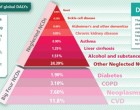
The conference was particularly exciting because of the recently published Global Burden of Disease Study 2010 (GBD 2010) – a series of articles on how the international disease burden has changed since 1990. Although people are living longer due to decreases in the burden of infectious diseases and malnutrition, non-communicable diseases, such as cancer and cardiovascular disease, are on the …

Read more

Medicine for Global Health: a new article collection from BMC Medicine

- 0 Comments

Care of vulnerable populations constitutes a sizeable proportion of those in need of medical resources, and there exists considerable disparity between those who can, and can’t afford  access to medical services.  Although these issues have always existed, concerns over global health and health inequities have been emphasized over recent years. For instance, few will forget the devastation caused by Hurricane Sandy in November 2012, where much of the focus was on the U.S., despite the fact that the devastation caused by the hurricane was far more severe in Haiti. As a country that is much more restricted in terms of resources, the impact on livelihood and medical facilities was far greater to the residents of this area.

Many …

Read more

Progression in the field of Emergency Medicine: highlights from the 5th National Emergency Medicine conference in London

- 0 Comments

Patients requiring immediate and urgent medical care for acute illnesses or injuries will fall under the care of those in the emergency medicine sector. These healthcare professionals include paramedics, who deal with pre-hospital care, and also includes emergency department physicians and nurses, and a growing body of clinical researchers in this area. Given that decisions made in the emergency setting can make the difference between life and death, interest in this medical specialty is understandably high.

This month, BMC Medicine attended the 5th National Emergence Medicine conference in London, UK, which aimed to stimulate discussion on current issues in emergency medical care, and to provide participants with ideas that can be translated into clinical practice.

One of the …

Read more

This week in BMC Medicine: Sports medicine, physiological changes and improving endurance

- 0 Comments

It is well known that exercise is beneficial for health, and this Olympic year has underscored the public health benefits of regular exercise. For instance, a recent study has demonstrated that Olympians live for around 2.8 years longer on average than the general population. However, we needn’t be Olympians to enjoy this longevity; those who partake in the recommended 150 minutes of moderate/vigorous physical activity per week also seem to have a survival advantage compared with the inactive general population.

One specific advantage related to exercise seems to be relevant for those with musculoskeletal conditions. These conditions are the most common cause of severe long-term pain and physical disability. Evidence from an overview of systematic reviews

Read more

BMC Medicine at The World Sports Trauma Congress and 7th EFOST Congress

- 0 Comments

The general health benefits of regular exercise are well known and highly recommended, but increasing levels of sports can also mean an increase in the incidence of sports injuries. Therefore, there has been growing interest in sports trauma treatment and prevention, not just in the elite athlete, but also in the ‘weekend warrior’; a term used to describe those who participate in relatively high intensity sports, but only recreationally and normally at the weekend.

This month, BMC Medicine attended The World Sports Trauma Congress and 7th EFOST Congress, which focused on sports trauma, and exercise medicine. This London-based international congress, jointly organized by Mike Carmont, an orthopedic surgeon and also the guest editor of …

Read more

Can genes explain the link between obesity and progression of prostate cancer?

- 0 Comments

Obesity is becoming a common issue in most industrialized nations, with the prevalence in the United States, for instance, reaching over a third of the population, while deaths linked to obesity in the UK have risen dramatically, highlighting the important relationship between obesity and health. Diseases associated with obesity represent a significant medical and financial burden, and include diabetes, cardiovascular disorders and certain cancers.

There is much data that indicates a direct association between obesity and the risk of developing cancer, and for certain cancers, such as pancreas and breast cancer, this link is well established. The link between obesity and prostate cancer, however, is still under debate, although there …

Read more

Clinical biomarkers: recent developments in cancer and rheumatology

- 0 Comments

Clinical diagnosis can be challenging – but the ongoing development of diagnostic and prognostic biomarkers is paving the way towards improved therapy. This week, recent advances in biomarker research are presented in three articles published in BMC Medicine. Der-Yuan Chen and colleagues from National Yang-Ming University report the discovery of germinal center kinase-like kinase (GLK) as a biomarker for disease activity of adult-onset Still’s disease, a rare form of inflammatory arthritis. Assessment of the levels of this biomarker will be useful in establishing therapy efficacy.

Research by Shan-shan Zhang and colleagues at Second Military Medical University demonstrates that expression of the markers CD133 and CXCR4 is associated with metastasis and …

Read more

Advances in Sports Nutrition, Exercise and Medicine: a new cross-journal article collection

- 0 Comments

The London Olympics are imminent – inevitably the focus for most will be on the achievements of athletes after years of intensive training to go faster, higher and further. However, behind the scenes, there has also been increased focus on the topic of sports and exercise medicine.

In recognition of the research which has been developing in this area, BMC Medicine has launched a new cross-journal article collection: ‘Advances in Sports Nutrition, Exercise and Medicine’ edited by Mr. Mike Carmont, a Consultant Trauma and Orthopaedic Surgeon with an interest in lower limb sports surgery and sports medicine.

Mike Carmont introduces the article collection with an editorial published in BMC Medicine, giving an …

Read more

Links between seasons, sunshine and immune-mediated diseases

- 0 Comments

Immune-mediated diseases arise when there is aberrant activity in the body’s immune system, such that it directs an immune response against its own cells and tissues, causing damage and disease. Prominent examples of immune-mediated diseases include rheumatoid arthritis (RA), Crohn’s disease (CD), ulcerative colitis (UC), systemic lupus erythematosus (SLE) and multiple sclerosis (MS). These conditions affect 5-10% of the population in the developed world. This percentage has been increasing and the economic and health burdens associated with these conditions are significant.

These are complex diseases, which mean that there is no single cause but rather a combination of genetic and environmental factors. As the overall incidence of immune-mediated diseases is increasing, this …

Read more